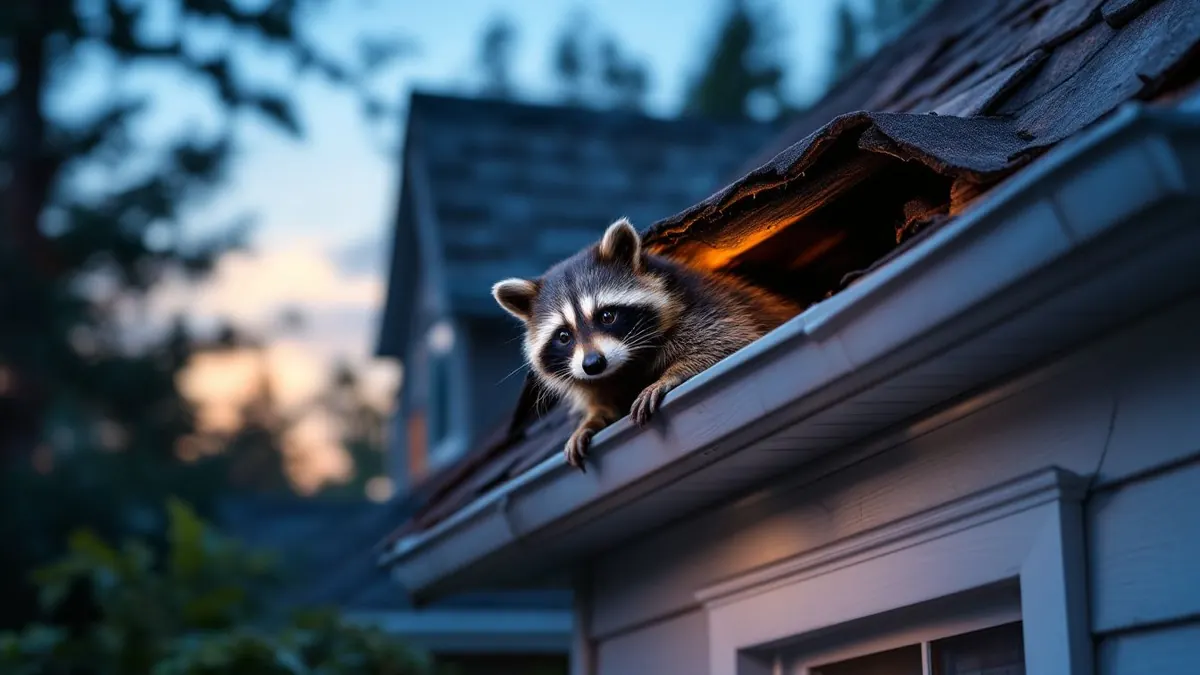
Scratching, thumping or squeaking overhead usually means an animal has found a way into your attic. The time of day and type of noise are the best clues to what it is — and the right removal method depends on the animal.
Identify the animal by noise and timing
| Noise | When | Likely animal |
|---|---|---|
| Scampering, rolling sounds, scratching | Early morning and late afternoon | Squirrels — see squirrels in the attic |
| Heavy thumping, walking, growling or chattering | Night | Raccoons — see raccoons in the attic |
| Light scratching, scurrying, gnawing | Night | Mice or rats — see rodent control |
| Fluttering, squeaking at dusk | Dusk and dawn | Bats — see bats in the attic |
| Chirping, rustling near vents | Daytime, spring | Birds nesting in vents or soffits |
| Scratching at night under decks or near the foundation | Night | Opossums or skunks |
Other signs to look for
- Entry holes: chewed soffits, fascia, roof vents, gable vents, gaps where roofs meet.
- Droppings: rice-sized (mice), larger capsule-shaped (rats), clumped and large (raccoons), crumbly and shiny (bat guano).
- Damaged insulation, chewed wires, ductwork damage.
- Smells: urine odor, or a dead-animal smell.
How animals are removed
- One-way exclusion doors over the main entry let animals leave but not return — common for squirrels, bats and some raccoons.
- Live trapping where legal, followed by release or relocation according to state rules.
- Baby animals: in spring and summer, mothers often have young inside. Removal has to account for them so babies aren't trapped and left to die.
- Sealing all other openings before or during exclusion, and the main entry once the animals are out.
Health and safety
Raccoon feces can contain roundworm eggs, bat guano can carry histoplasmosis spores, and rodent droppings can carry hantavirus. Avoid stirring up droppings and consider professional cleanup for contaminated insulation.
Attic cleanup and cost
Wildlife removal averages about $400, with most jobs between roughly $190 and $610; attic cleanup and repairs can add $200–$1,500+, per 2026 cost guides. More: wildlife removal.
Frequently asked questions
Will the animal leave on its own?
Sometimes temporarily, but attics are warm and safe, and animals often return or raise young there. Exclusion and sealing are what keep them out.
Can I use poison in the attic?
It's not recommended. Poisoned animals can die in walls and cause odors, and poison can harm pets and non-target wildlife. For wildlife it's often illegal.
Does homeowners insurance cover attic animal damage?
Some policies cover sudden damage from certain animals (like raccoons), but not removal or damage from rodents. Check your policy.