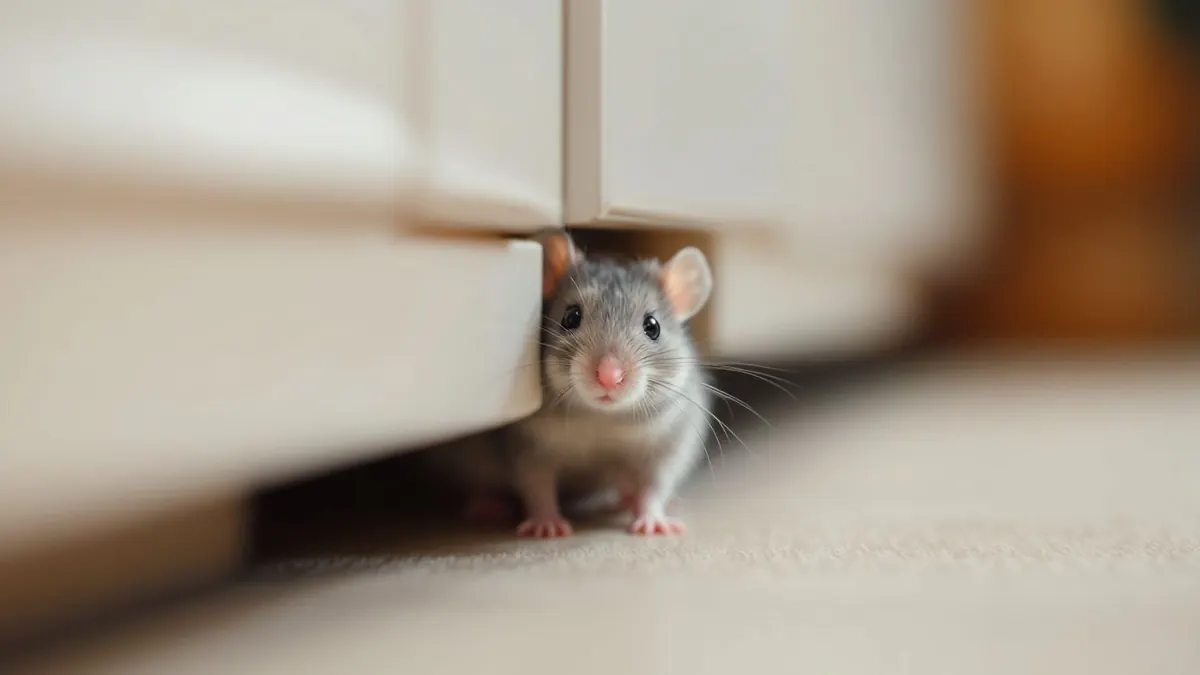
Mice are most likely to move in during fall and winter, and they can squeeze through a gap about the size of a dime. Getting rid of them is a two-part job: remove the mice already inside, then seal the way they got in. Skip the second part and new mice will keep arriving.
1. Confirm it's mice (not rats or squirrels)
- Droppings about the size of a grain of rice → mice. Larger, raisin-sized → rats.
- Scratching at night in walls or ceilings → mice or rats. Daytime noise in the attic → often squirrels (see wildlife removal).
2. Find the entry points
Walk the outside of your home with a flashlight. Check:
- Gaps where pipes, cables and AC lines enter
- Garage door seals and corners
- Foundation cracks and vents without screens
- Gaps under exterior doors
- Roofline gaps, especially where roof meets siding
3. Trap the right way
- Use snap traps or enclosed traps along walls, where mice travel — not in the middle of the floor.
- Place traps perpendicular to the wall, trigger side facing it.
- Bait with a small amount of peanut butter.
- Set many traps at once (a dozen or more for an active problem) rather than one or two.
- Check traps daily and wear gloves.
Glue traps and poison baits inside living spaces cause more problems than they solve — poisoned mice can die inside walls and smell for weeks.
4. Mice in the walls?
Set traps near where the wall noise is loudest, at points where mice can exit (behind appliances, under sinks, in the basement or attic). If activity continues after one to two weeks, a professional can locate runways and nesting areas.
5. Clean up safely
Don't sweep or vacuum dry droppings. The CDC recommends ventilating the area, wearing gloves, spraying droppings and nesting material with disinfectant or a bleach solution, letting it soak, then wiping it up.
6. Seal everything
Close gaps with steel wool plus sealant, copper mesh, hardware cloth or sheet metal. Mice chew through foam, rubber and wood. Install door sweeps and repair torn vent screens.
When to call a pro
- You keep catching mice after two weeks
- You hear activity in multiple rooms or floors
- You find rat droppings or burrows
- There are droppings in an attic or crawl space with insulation damage
See rodent control for how professional exclusion works and what it costs.
Frequently asked questions
Do ultrasonic repellers work?
Research on plug-in ultrasonic devices is not encouraging; mice tend to get used to them. Exclusion and trapping are proven methods.
Will a cat get rid of mice?
A cat may catch a few, but it won't fix the entry points, and mice often keep living inside walls where cats can't reach.
How long does it take to get rid of mice?
A small problem can be solved in one to two weeks with good trapping and sealing. Larger infestations take longer and usually benefit from professional help.