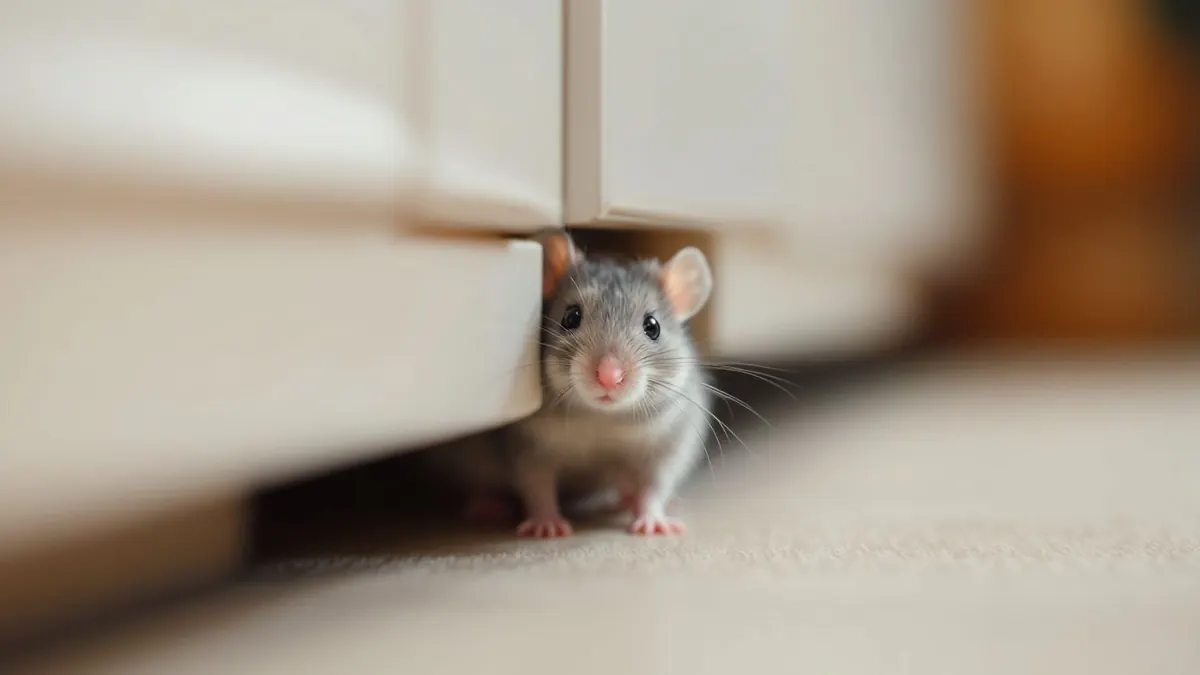
Mice and rats move indoors when the weather cools, and once inside they breed fast. A single pair of mice can turn into dozens within a few months. Beyond chewed food packaging, rodents gnaw wiring (a fire risk), contaminate surfaces and can carry diseases — deer mice, for example, can carry hantavirus. Lasting rodent control means removing the animals and sealing the gaps they used to get in.
Signs of mice or rats
- Droppings: mouse droppings are rice-sized; rat droppings are larger, like a raisin or olive pit.
- Scratching or scurrying in walls and ceilings, especially at night.
- Gnaw marks on food packaging, baseboards, wires and pipes.
- Grease marks along walls where rodents run.
- Nests of shredded paper, insulation or fabric in hidden areas.
- Pets acting strangely near appliances or walls.
Mice vs rats
| House mouse | Norway rat | Roof rat | |
|---|---|---|---|
| Size | 2.5–3.5" body | 7–10" body | 6–8" body, long tail |
| Entry gap | About ¼" (a dime) | About ½" (a quarter) | About ½" |
| Where | Walls, cabinets, attics | Basements, ground floors, burrows | Attics, trees, upper floors |
How professionals handle rodents
- Inspection of the exterior and interior to find every entry point — vents, utility lines, garage doors, foundation cracks, roof gaps.
- Trapping and tamper-resistant bait stations, placed where children and pets can't reach.
- Exclusion: sealing holes with steel mesh, sheet metal and sealant that rodents can't chew.
- Sanitation and cleanup of droppings and nesting material in attics or crawl spaces when needed.
- Follow-up visits to confirm the population is gone.
Rodent control cost
According to 2026 cost guides, rodent removal typically costs $175–$550. Exclusion work and attic cleanup add to the bill but are what prevent the problem from coming back. Read our step-by-step guide to getting rid of mice or try the cost estimator.
Safety note
Don't sweep or vacuum dry rodent droppings — it can put particles in the air. The CDC recommends wetting droppings with a disinfectant first and wearing gloves. Large cleanups are best left to a pro.
Frequently asked questions
Why are mice back after I caught a few?
Traps remove animals, but if entry points stay open, new rodents keep coming in. Exclusion work is the long-term fix.
Are rodent baits safe around pets?
Professionals use locked, tamper-resistant stations and often rely on traps indoors. Tell your technician about pets so they can choose the safest approach.
When are mice most likely to get in?
Fall and early winter, when outdoor food and shelter disappear. Sealing gaps in late summer is the best prevention.