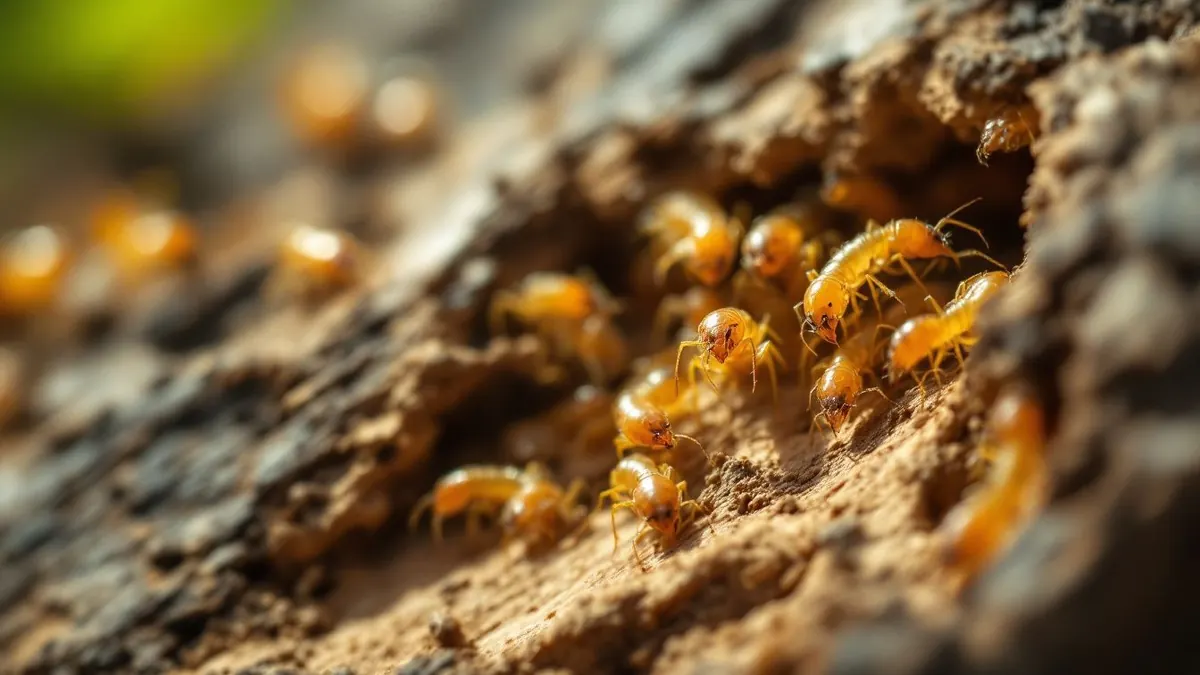
Termites are the one household pest that can quietly damage the structure of your home. Colonies feed 24 hours a day, usually out of sight inside walls, floors and framing, and many homeowners only find out when a door starts sticking or a floorboard gives way. The good news: termites are very treatable when you act early, and a professional inspection is often free or low cost.
Signs you may have termites
- Swarmers or discarded wings. Winged termites emerge in spring (and after warm rain) to start new colonies. Piles of identical wings on windowsills are a classic sign.
- Mud tubes. Pencil-wide tunnels of soil on foundation walls, piers or in the crawl space. Subterranean termites build them to travel between soil and wood.
- Hollow-sounding or blistered wood. Tap baseboards and trim with a screwdriver handle. Damaged wood sounds papery or crumbles.
- Frass (droppings). Drywood termites push out tiny, sand-like pellets that pile up below infested wood.
- Sticking doors and windows, bubbling paint. Moisture from termite activity can warp frames and lift paint.
If you see one of these, read our full guide to the signs of termites — and avoid spraying or disturbing the area before an inspection, because it makes the colony harder to trace.
Types of termites in the U.S.
| Type | Where | How they're treated |
|---|---|---|
| Subterranean | All lower 48 states; most common | Liquid soil barrier or bait stations |
| Formosan (subterranean) | Gulf Coast, Southeast, Hawaii, parts of California | Aggressive colonies; baits and barriers, often both |
| Drywood | Florida, southern California, Arizona, Gulf Coast, Hawaii | Spot treatment, heat or whole-house fumigation |
| Dampwood | Pacific Northwest and damp coastal areas | Fix moisture problems plus targeted treatment |
Not sure how high the risk is where you live? Check our termite risk by state table.
Treatment options compared
Liquid termiticide barrier. A pro trenches around the foundation and treats the soil so termites can't reach the house. It's the most common treatment for subterranean termites and works fast.
Bait stations. Stations are installed in the ground around the home. Termites feed on a slow-acting bait and carry it back, eliminating the colony over weeks or months. Stations are monitored and refilled, usually as part of a yearly plan.
Spot and foam treatments. Used for localized drywood infestations or hard-to-reach voids.
Fumigation (tenting) and heat. For widespread drywood termites, the whole structure is sealed and treated. You'll need to leave home for a few days with fumigation.
How much does termite treatment cost?
Based on 2026 national cost guides, typical pricing looks like this:
- Liquid treatment: about $3–$16 per linear foot of foundation
- Bait stations: about $7–$12 per linear foot, plus a yearly monitoring plan
- Fumigation: about $1–$4 per square foot — roughly $2,000–$8,000 for a 2,000 sq ft home
Most localized jobs land in the low-to-mid hundreds; whole-home work runs into the thousands. See the full breakdown in our termite treatment cost guide or get a ballpark with the cost estimator.
Can you treat termites yourself?
Store-bought termite products can kill termites you can see, but they rarely reach the colony, which may be in the soil dozens of feet away. Most homeowners' insurance policies also exclude termite damage, so a missed colony becomes your bill. For active termites, a professional inspection is the safest first step — then you can decide on treatment with real information.
Frequently asked questions
How fast do termites damage a house?
It depends on colony size and species, but damage usually builds over months to years. Formosan colonies are large and can cause serious damage faster. The sooner a colony is treated, the less repair work you'll face.
Does homeowners insurance cover termite damage?
Usually not. Most policies treat termite damage as preventable maintenance, which is why yearly inspections or a termite warranty are popular in high-risk states.
Is termite treatment safe for kids and pets?
Professional products are EPA-registered and applied according to the label. Most liquid and bait treatments are outside or in the soil; your technician will tell you about any re-entry time. Read more in our pets and kids safety guide.
How long does a termite treatment last?
Liquid barriers typically protect for several years, depending on the product and soil. Bait systems protect as long as they're monitored and maintained.