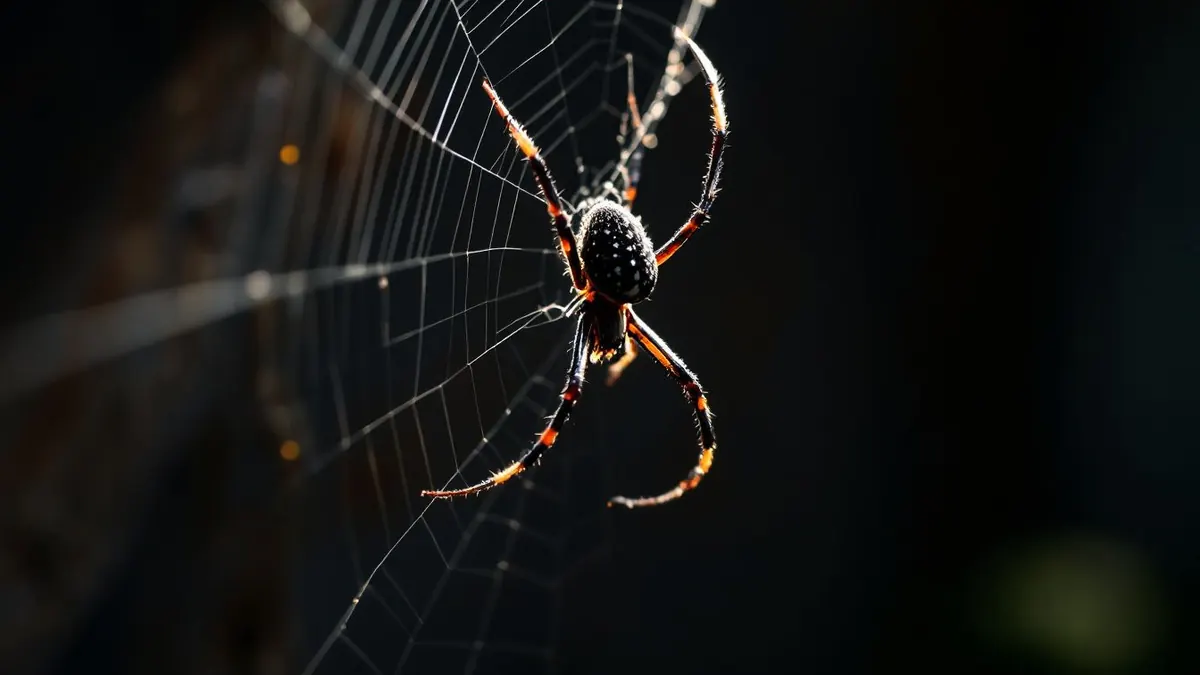
Most house spiders are harmless and even help by eating other insects. But heavy web activity is unpleasant, and two groups deserve real caution in the U.S.: black widows (found across the country) and the brown recluse (mainly in the central and southern states). Effective spider control targets both the spiders and the insects that attract them.
Spiders worth knowing
- Black widow: shiny black with a red hourglass under the abdomen. Hides in woodpiles, garages, sheds, meter boxes and outdoor furniture.
- Brown recluse: tan to brown with a darker violin-shaped mark; six eyes. Hides in boxes, closets, attics and unused clothing — common in states like Missouri, Kansas, Oklahoma, Arkansas, Tennessee and Kentucky.
- Common house spiders, cellar spiders, wolf spiders: nuisance species, mostly harmless.
How professionals control spiders
- Inspection of harborage areas: garages, basements, eaves, crawl spaces.
- Web and egg sac removal around the exterior.
- Perimeter and crack-and-crevice treatment to stop spiders moving inside.
- Insect control: fewer insects = fewer spiders. Outdoor lighting changes help too.
- Glue monitors to measure activity, especially for brown recluse.
Brown recluse infestations take patience: they live in clutter and can survive long periods without food, so a plan usually includes several visits.
Spider control cost
Spider treatment is often handled as part of a general pest visit — roughly in the same range as a one-time service (about $100–$300 for most homes, per 2026 cost guides), or included in a quarterly plan. Brown recluse programs with multiple visits cost more.
Frequently asked questions
What should I do after a spider bite?
Clean the area and apply a cold pack. Seek medical care promptly if you suspect a black widow or brown recluse bite, or if you develop spreading redness, severe pain, cramping or fever.
Will sealing my house stop spiders?
It helps a lot. Door sweeps, window screens and sealed gaps keep out spiders and the insects they hunt.
Why do I see more spiders in fall?
Many male spiders wander indoors looking for mates in late summer and fall, so sightings increase even if the population hasn't.