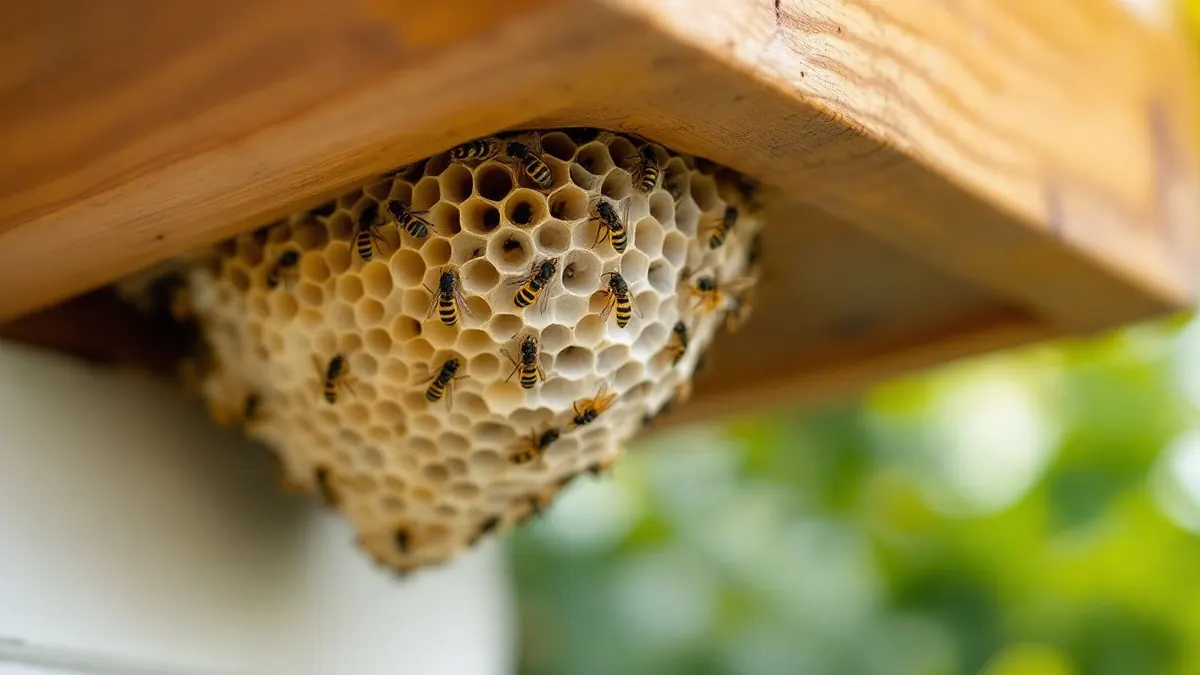
A wasp nest near a doorway, deck or play area is a real safety risk. Yellow jackets and hornets defend their nests aggressively and can sting repeatedly, and multiple stings are dangerous for anyone with an allergy. Nests in walls, attics or underground are especially risky to tackle yourself.
Which stinging insect is it?
| Insect | Nest | Temperament |
|---|---|---|
| Paper wasp | Open, umbrella-shaped comb under eaves and railings | Moderately defensive |
| Yellow jacket | Hidden: underground, in walls, in attics | Very aggressive, especially late summer |
| Bald-faced hornet | Large gray paper ball in trees or on buildings | Very aggressive |
| Mud dauber | Mud tubes on walls | Rarely stings |
| Honey bee | Wax comb in cavities | Usually calm; protected — call a beekeeper or bee removal pro |
Why yellow jackets in walls need a professional
If you see a steady stream of wasps entering a crack in siding or a vent, there's likely a nest in the wall void. Don't seal the hole — trapped yellow jackets can chew through drywall into the house. A professional treats the void with a dust that workers carry into the nest, then seals the entry once activity stops.
How nest removal works
- Identification of the insect and nest location.
- Treatment, usually at dusk or dawn when the colony is inside.
- Removal of exposed nests once inactive.
- Sealing entry points and, if needed, a follow-up visit.
Honey bees are treated differently: many pros relocate swarms and remove comb so it doesn't attract pests or leak honey into walls.
Nest removal cost
An accessible paper wasp or hornet nest is typically a few hundred dollars or less. Nests inside walls, high on a roofline or underground cost more because of the extra labor and access. A pro can quote exactly over the phone once they know the location.
Frequently asked questions
Can I knock down a wasp nest myself?
Small paper wasp nests early in spring are sometimes manageable, but yellow jacket and hornet nests are best left to a pro. Most stings happen when someone disturbs a nest without protective gear.
When are wasps most aggressive?
Late summer and early fall, when colonies are largest and food is scarce.
What should I do if someone is stung many times?
Call 911 for trouble breathing, swelling of the face or throat, dizziness, or many stings — especially for children and people with known allergies.